



Without a map, you're just wandering
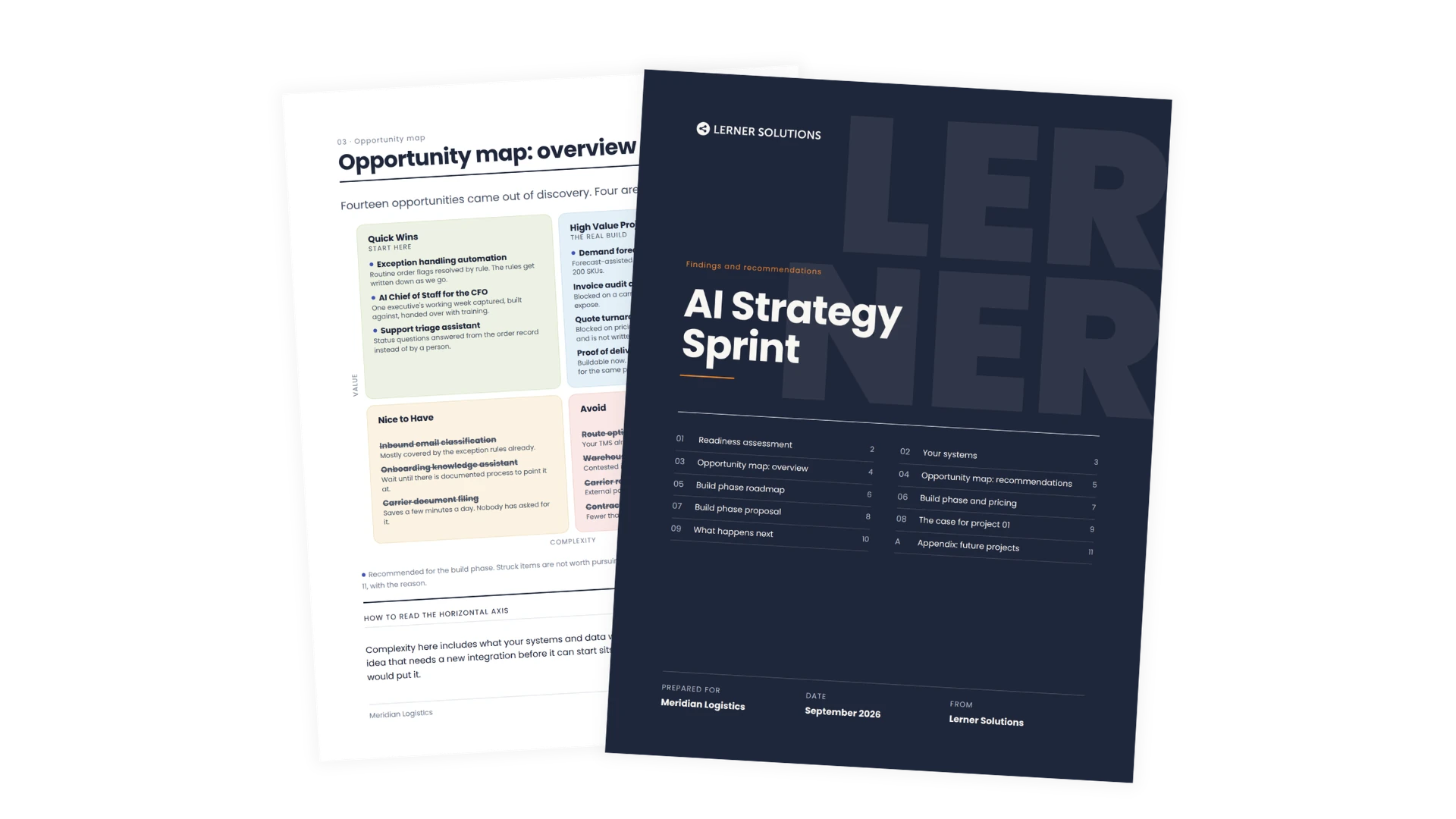
3-week engagement to map your AI opportunities, assess your readiness, and scope/price a 90 day roadmap based on your business objectives.





Everyone is scrambling to figure out AI. We can help.
how we’ll jumpstart your ai roadmap
this ain’t our first rodeo

Your tech stack is our day job
Identity, security, networks, and the systems your business actually runs on. AI has to land inside that environment, and it's the environment we work in every day.

Operator-led and engineer-built
Pointing AI at the wrong problem is the most common failure. Strategists set the scope, engineers build it, and neither job substitutes for the other.

Governance is standard practice
Permissions, data handling, retention, and policy are how we already work. AI gets deployed inside real controls rather than around them.

Enablement at the center
The best build is worthless if nobody knows how to use it. Training is in every engagement from the start, because adoption is what determines the return.
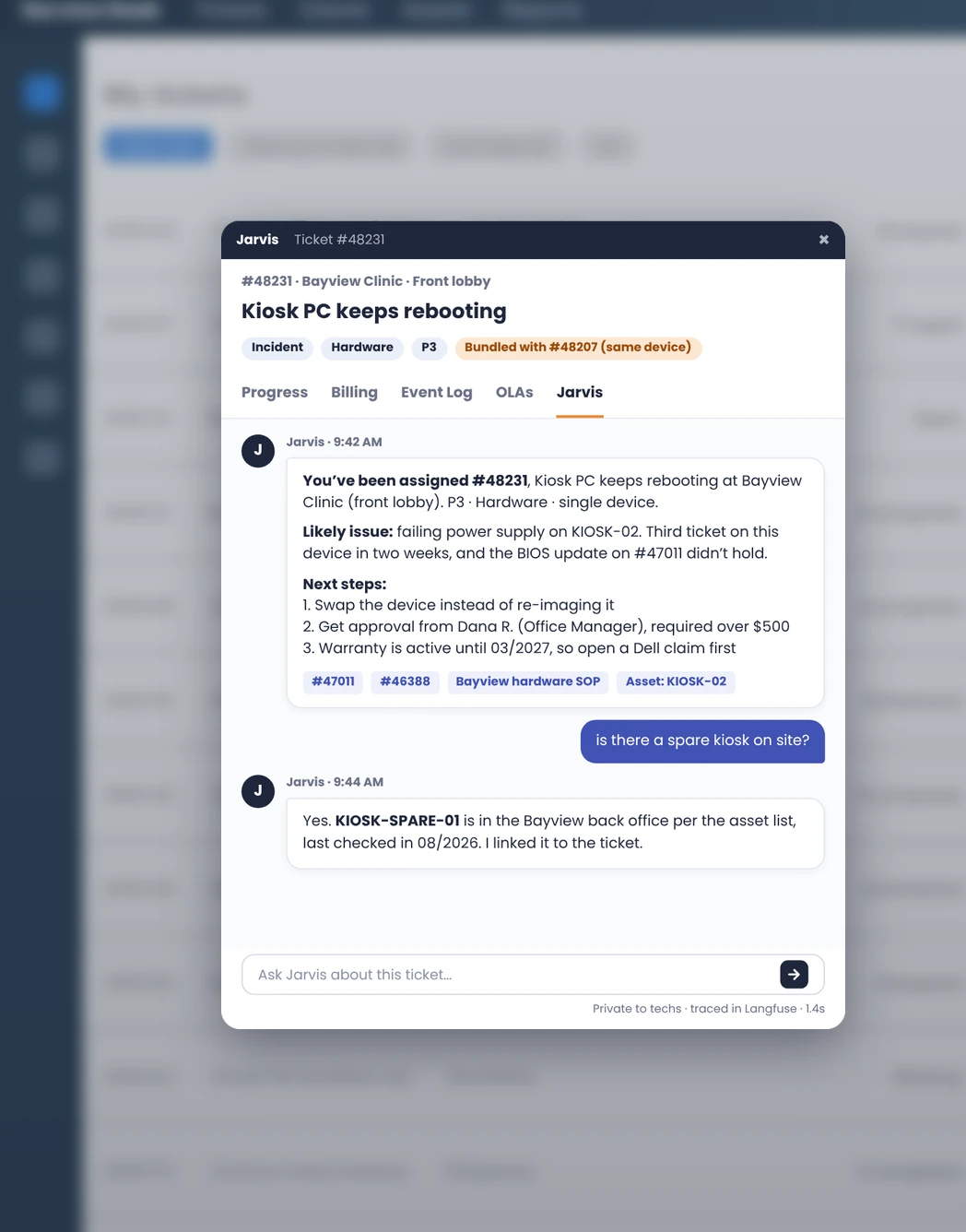
We take our own medicine
We don't just build agents for clients, we run them ourselves. Our service desk takes in hundreds of tickets a week by email, portal, phone, and monitoring alerts, and one person triaged and routed most of them by hand. About 42% got reassigned at least once. We built four agents on one shared data layer: they triage each ticket, route it to the right tech, assist inside the ticket, and learn from every correction. It went live in about three weeks.
Use the playbooks we use to plan better technology

IT Playbook for Startups
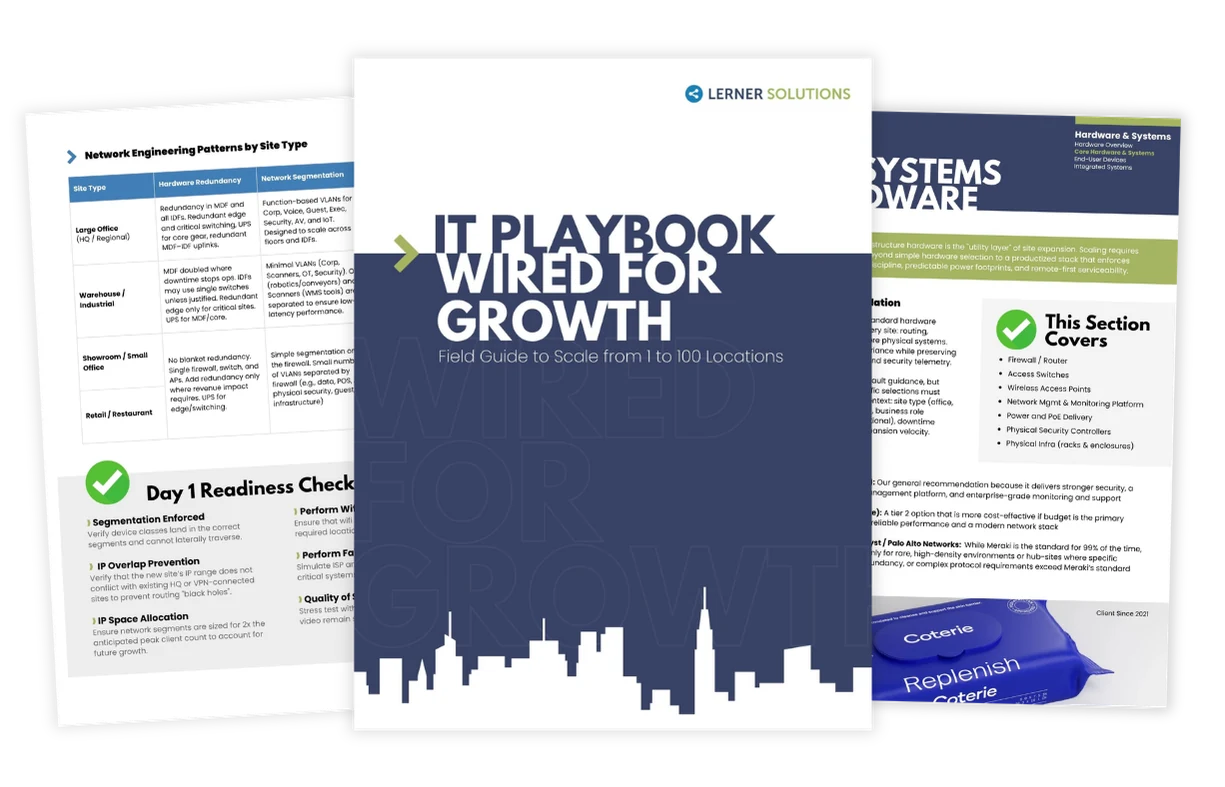
IT Design/Build: Wired for Growth
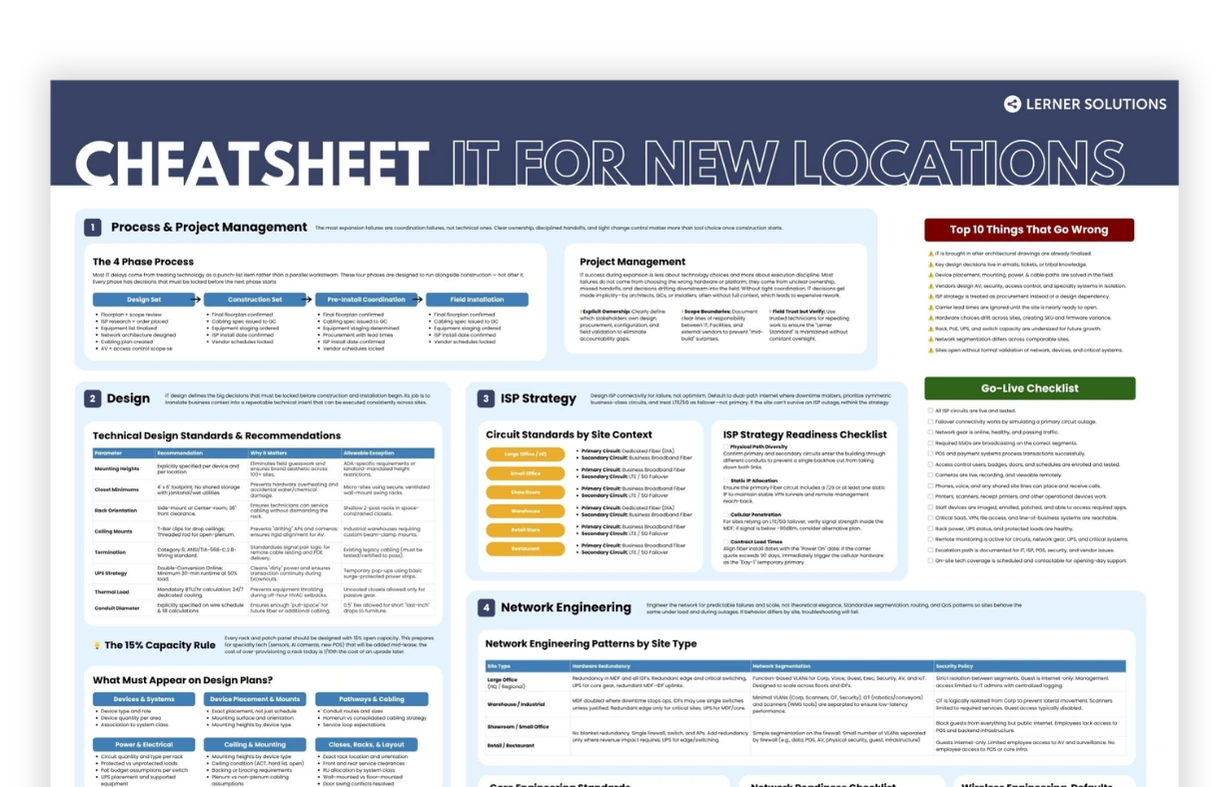
New Location Cheat Sheet
Before we talk, here's what most teams want to know.
No. It’s a deep dive into your business, systems, processes, people and readiness. You walk away with process maps, an opportunity map and a readiness assessment you keep, whatever you decide next.
The boss, and the people who do the work. The boss because this is about hitting business goals, not just deploying technology. The people doing the work because they’re the ones who make it deploy well and actually get used.
Almost everyone is ready for something. We’ll be straight about what you’re ready for and what you’re not. Deploying technology nobody adopts is a bad return for everyone, including us.
That’s normal. Often the first step is data and system integration, the foundation AI and automation sit on. We can run self-contained quick wins in parallel, so your team sees results while the foundation gets built.